
International trade with Iran continues to attract companies across industrial, manufacturing, chemical, construction, and commodity sectors. Even after recent military engagements and the conflict that has directly impacted the region, Iran remains an active and strategically important market for global trade. The reality is that while recent geopolitical shocks have introduced new challenges, they have not stopped the country’s economic and industrial momentum.
Today, the conversation for international businesses is no longer about whether trade with Iran is possible; it is about how to trade with Iran more efficiently, securely, and professionally in a post-conflict regional environment.
Many companies that already work with Iranian suppliers are now adjusting their logistics strategies, communication channels, and sourcing methods to maintain stable operations. At the same time, new businesses entering the market are searching for trusted local partners who understand export coordination, alternative shipping routes, supplier verification, and the practical trade realities inside Iran today.
This guide explains how businesses can continue trading with Iran after recent regional developments while identifying reliable trade opportunities, updated logistics solutions, and long-term commercial strategies.
Understanding Iran’s Trade Environment After Regional Tensions
Iran’s trade environment has evolved significantly over recent years. Businesses operating in the region have become highly flexible in response to shifting logistics conditions, banking limitations, and supply chain adjustments.
Despite geopolitical developments, trade activity across Iran has remained active in many industrial sectors. Manufacturing, petrochemicals, mining, construction materials, chemicals, agriculture, and industrial production continue operating with strong domestic and export demand.
International companies trading with Iran today are increasingly focused on:
- Reliable sourcing networks
- Alternative logistics routes
- Rail and multimodal transportation
- Supplier verification
- Faster, secure communication channels
- Regional trade coordination
- Flexible shipment planning
- Market transparency
Rather than stopping operations, many businesses have adapted by diversifying transportation methods and strengthening regional partnerships. Companies that approach the market strategically are still successfully importing from Iran, exporting to Iran, and building long-term commercial relationships with Iranian manufacturers and suppliers.
Is Iran Still Open for International Trade?
Yes.
Iran remains one of the region’s largest industrial economies with strong production capabilities across multiple sectors. The country continues to play a vital role in regional trade due to its geographic position connecting the Middle East, Central Asia, the Caucasus, and neighboring international markets.
Many international businesses continue exploring trade opportunities in Iran because of:
- Competitive manufacturing and operational costs
- Strong industrial infrastructure
- Large domestic market demand
- Direct access to vast energy resources
- Massive petrochemical production capacity
- High availability of mining and mineral products
- Growing regional export opportunities
For companies involved in industrial sourcing, chemicals, raw materials, construction materials, agriculture, manufacturing, or commodity trading, Iran continues to offer valuable commercial potential. However, international buyers increasingly require updated market insight, reliable communication, and professional coordination before entering new partnerships.
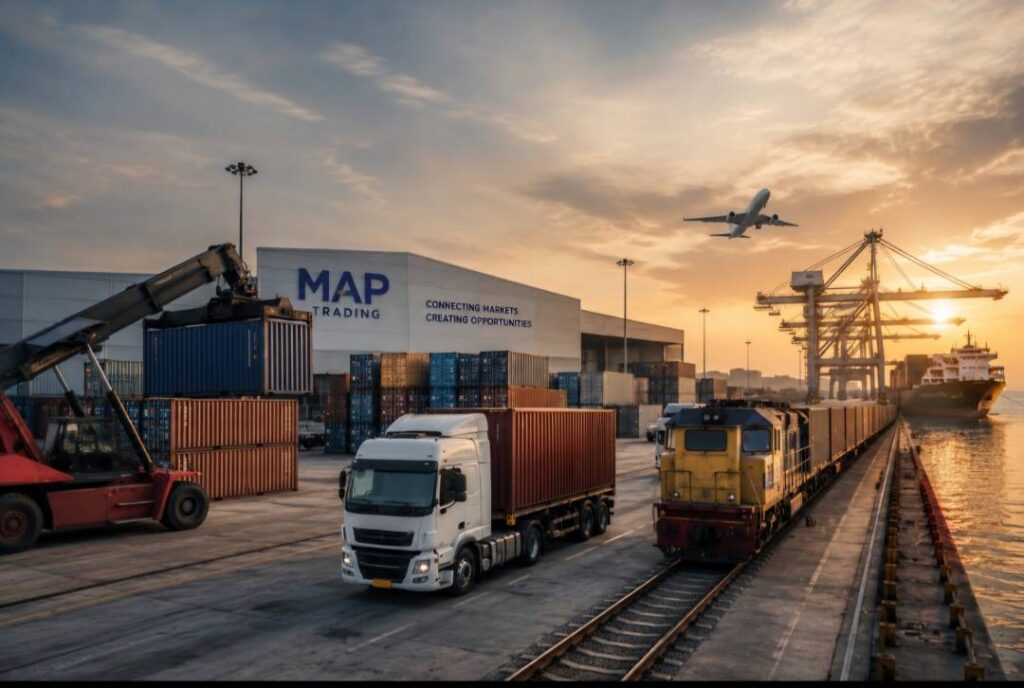
Alternative Logistic Routes
Logistics Solutions for Iran
One of the biggest changes in today’s market is the growing importance of flexible logistics planning. International companies trading with Iran are increasingly using alternative transportation methods and regional transit routes to maintain stable supply chains and reduce operational delays.
1. Rail Transportation and Regional Transit Corridors
Rail freight has become an increasingly practical and stable option for regional cargo movement connected to Iran. Rail-based logistics help improve shipment continuity for industrial products, raw materials, and bulk cargo, bypassing typical maritime or road delays.
2. Trade Routes Through Turkey and Mersin Port
Turkey remains one of the most vital regional gateways for logistics connected to Iran. Many businesses now utilize logistics solutions involving:
- Utilizing the capacities of Mersin Port
- Truck-to-rail cross-border coordination
- Regional cargo consolidation
- Transit trade operations
3. Trade Through Neighboring Countries
Neighboring countries continue playing an important role in regional Logistics coordination with Iran:
- Oman and Iraq: Serving as major hubs for financial coordination and regional cargo redistribution.
- Pakistan and Central Asian Markets: Expanding new overland and rail corridors to secure supply chain flexibility.
Key Industries and Export Opportunities in Iran
Iran’s economy includes several highly active industrial sectors with strong international trade and export potential:
| Industrial Sector | Key Export Products |
|---|---|
| Petrochemicals & Chemicals | Base oil, Bitumen, Methanol, Urea, Solvents, Industrial chemicals, Fertilizers, and Polymer materials. |
| Construction Materials & Steel | Cement, Clinker, Rebar, Steel billets, Iron ore, and Industrial minerals. |
| Raw Materials & Supply Chains | Plastic raw materials, Packaging production, and intermediate components for heavy industry. |
Conversely, factories inside Iran continue to have a strong demand for importing specialized machinery, industrial additives, advanced equipment, and manufacturing components from international suppliers.
How Businesses Can Trade More Efficiently With Iran
Successful international trade today requires much more than simply finding a supplier or buyer. Companies that continue operating efficiently with Iran usually focus on four key pillars:
- Working With Verified Suppliers: Ensuring you work with legitimate, experienced companies capable of maintaining stable communication, product consistency, export coordination, and absolute commercial transparency.
- Maintaining Flexible Logistics Planning: Avoid relying on a single transport route. Utilizing a mix of rail transportation, alternative shipping routes, and multi-country logistics coordination yields the highest stability.
- Building Long-Term Business Relationships: Trade with Iran remains deeply relationship-driven. Companies that focus on long-term cooperation and mutual trust instead of short-term transactions achieve significantly stronger operational stability.
- Staying Updated on Market Conditions: Constantly monitoring pricing trends, customs regulations, product availability, and local shipment conditions to make informed commercial decisions.
The Importance of Reliable Local Trade Support
Entering or expanding within the Iranian market can initially feel complex due to changing logistics structures, regulatory adjustments, and bureaucracy. Reliable local trade support simplifies many parts of the process, including:
- Product sourcing and verification (Sourcing)
- Supplier communication and commercial negotiations
- Export/Import documentation and customs compliance
- Logistics follow-up and cross-border cargo monitoring
How MAP Trading Supports International Businesses
At MAP Trading, we understand that international trade is not only about products — it is about trust, coordination, clear communication, and long-term business relationships. We support companies looking to trade with Iran by helping simplify sourcing, export management, and trade coordination processes.
Our specialized services include:
- International sourcing and procurement support
- End-to-end export coordination and import management assistance
- Facilitating commercial communication between international buyers and local suppliers
- Logistics coordination and regional trade routing
- Market-oriented business solutions tailored to current dynamics
Whether your company is searching for industrial raw materials, managing exports, or exploring new opportunities connected to Iran, our goal is to help create a smoother, more transparent, and highly reliable trade experience.
Final Thoughts
Iran continues to remain an active and strategically important market for international trade. While today’s environment requires greater flexibility, updated logistics planning, and stronger coordination, significant commercial opportunities still exist for companies willing to approach the market professionally.
With the right communication, diversified logistics planning, and the support of an experienced local partner who understands both the regional market realities and the operational details required for cross-border business, companies can continue developing stable and highly profitable commercial opportunities connected to Iran.